We crash-test physical AI.

On your buyer's real job.

Physical AI is the AI that runs robots. We test yours on your customer's real job: thousands of runs in simulation, then on a real robot. One page your buyer can trust.

NITH · Independent testing for physical AI

Maker's claimTheir own demo set
99%

Success in the maker's own demo set.

No failure reasons · no method
Measured by NITHYour job · 1,000 runs
94 / 100
Likely range
92–95 out of 100
A person steps in
4 times an hour
Time per item
9 s · a person: 6 s
In bright light
71 out of 100
Fails most on
Shiny packets
Example · not real results
NITH · SCORECARD · v1.0EXAMPLE
Grocery-packing robot · 1,000 runs
94 / 100packs right
Likely range
92–95 out of 100
A person steps in
4 times an hour
Time per item
9 s · a person: 6 s
In bright light
71 out of 100
Fails most on
Shiny packets
Near misses with people
0
RetestedMethod published
01 · The maker's demo

Every robot looks perfect in its demo.

Makers film their best take. This one took 47 tries.

Lights on.

02 · The test lab

Now the real test.

NITH is an independent test lab for physical AI, the software that decides how a robot moves. We test it on real jobs, not demos.

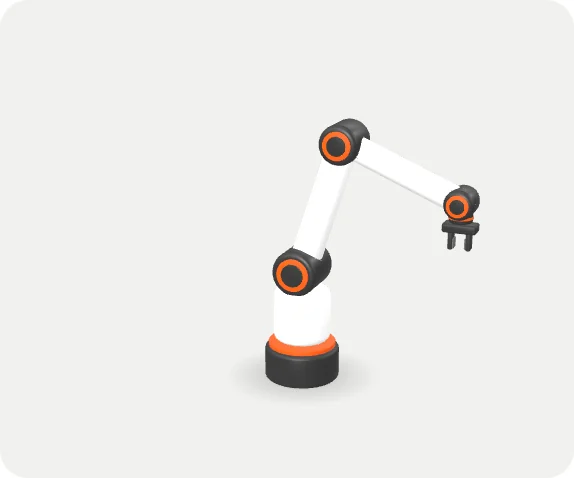
Bay 01 · Robot arm · Grocery packing
The job
A robot arm packs groceries into a crate.
What went wrong
A shiny wrapper fooled its camera. The packet slipped out of its grip.
What we measure
How often it gets each item right, and which items it fails on most.

On a real job, it slips.

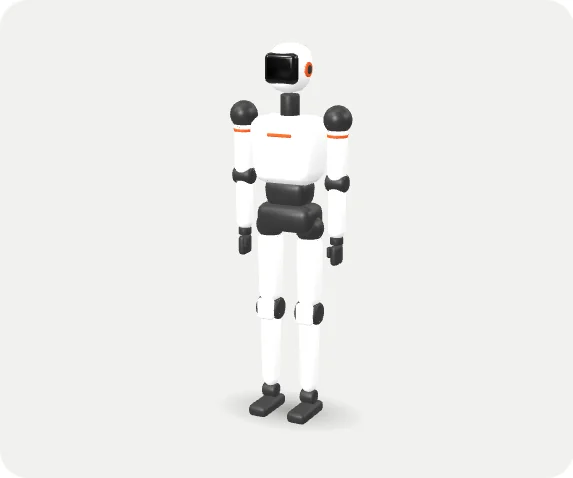
Bay 02 · Humanoid robot · Carrying parts
The job
A human-shaped robot carries boxes of parts across a factory.
What went wrong
A box was out of place. It froze, unsure what to do next.
What we measure
How often a person has to walk over and help. Here, 4 times an hour.

Someone has to step in.

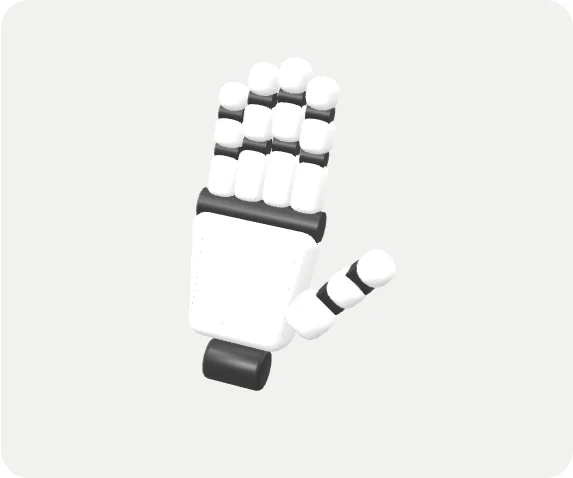
Bay 03 · Robot hand · Picking a tool
The job
A robot hand is told, in plain words: "Pick up the screwdriver."
What went wrong
It picked up the pliers. Physical AI often follows what it sees, not what it's told.
What we measure
How often it does what it was asked, even when the scene changes.

It didn't listen.

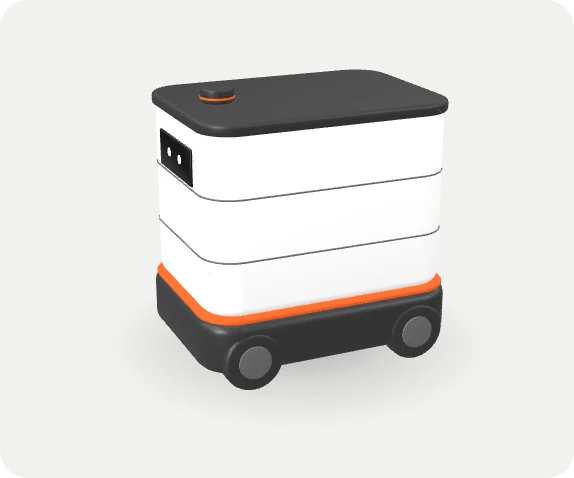
Bay 04 · Delivery robot · Hospital corridor
The job
A delivery robot carries medicine down a hospital corridor.
What went wrong
It didn't see a closed glass door, and drove straight into it.
What we measure
Every bump, and every close call with people.

It didn't see the glass.

Simulation

The same job, thousands of times.

In a computer copy of the job, we change the light, the positions and the items. Then we repeat the key tests on a real robot.

The evidence

Every failure has a clip.

Each mistake is recorded, so the maker can see exactly what went wrong.

The score

Their claim, next to what we measured.

One page a buyer can trust.

Retest

Fix it. Then retest.

When the maker updates its physical AI, we test again, so the maker and its buyers can see what changed.

Got a sale waiting on proof?

Book a test call
[01] How we test

From your job to a scorecard.

We test the physical AI on your real job: first thousands of times in simulation, then on a real robot. You get one page your buyers can trust, and the method behind it.

  1. Define the jobYou tell us the task, the items and what counts as success.01
  2. SimulateThousands of runs, changing the light, the positions and the packaging.02
  3. Test on a real robotA smaller set of real trials on your robot, or a matching one.03
  4. ScorecardHow often it succeeds, how fast, how often a person steps in, and why it fails.04
  5. Fix it, then retestEvery update gets a fresh score, so your buyers can see what changed.05
[02] What we check

Six things we measure on every robot.

Every test ends with the same six numbers, so a buyer can compare any physical AI fairly. Each one comes with the videos and the method behind it.

  1. 01Does it do the job?Success rate

    Out of every 100 tries, how many it gets right. We give an honest range, because 1,000 tries tell you more than 10.

    Example: 94 out of 100, likely 92–95
  2. 02Why does it fail?Failure types

    Every failure is sorted: it dropped something, picked the wrong thing, bumped into something or froze. Each one comes with a video clip.

    Example: fails most on shiny packets
  3. 03How often does a person have to help?Step-ins per hour

    Every time someone walks over to help, or takes control from a distance, we count it.

    Example: 4 times an hour
  4. 04Is it fast enough?Speed

    The time each task takes, next to a person doing the same job.

    Example: 9 seconds per item; a person takes 6
  5. 05Does it cope with change?Robustness

    We change the light, the positions, the items and the wording of the instruction, and measure how much the score drops.

    Example: in bright light, 94 drops to 71
  6. 06Is it safe around people?Near misses and bumps

    How close it comes to people, and everything it bumps into. We report what happened. We don't certify.

    Example: 0 near misses, 2 bumps
Also on requestItems damagedRemote take-oversHours per battery chargeResults after every update
How we keep the numbers honest
  • Thousands of runs in simulation, then trials on a real robot
  • The same test for every maker
  • An honest range, never one flattering number
  • We publish the full method, so anyone can check it
  • The maker can't edit the result
[03] Any robot. Any physical AI.

We test the AI, whatever the body.

We start with robot arms doing manual tasks: picking, packing and handling. That's what today's physical AI is built for. Open-source and rented physical AI are tested the same way.

First

Robot arms

Picking, packing and sorting at a workstation.

Next

Humanoids

Manual tasks in warehouses and shops.

Next

Robot hands

Fine grasping of soft, shiny and fragile items.

Later

Mobile robots

Robots that drive to the job, then pick.

[04] Our rules

Independence is the product.

A test is only worth something if nobody can lean on the result. These rules don't bend for anyone, including paying customers.

01Scores never flatter.We report what happened, even when the customer won't like it. Our fee is fixed and never depends on the score.
02We don't make physical AI.We don't build it, sell it or favour any of it. A referee doesn't play in the match.
03Your data stays yours.Your videos and logs stay private. We publish only the results you agree to.
04We publish the method.Anyone can rerun our tests and check our numbers.
Deepak Ananthapadman, founder of NITH
[05] About

We measure physical AI on the real job, and say plainly what we find.

Robot makers now build on AI they rent or download, and their buyers are asked to trust a demo. NITH is an independent test lab in London for physical AI, the AI that runs robots. We test that AI on the buyer's real job, thousands of times in simulation and then on a real robot, and report what happened.

Founded by Deepak Ananthapadman · NITH AI LTD · Registered in England and Wales
Why you can trust the results

Able to do the work, with nothing to gain from a flattering score.

01We know what a real job demands.Our founder has designed, engineered and delivered robot automation for manufacturers: assembly and packaging lines, a battery-pack line that combines three kinds of robot, and a cell that handles 50 kg bags every two minutes.
02We've built physical AI, and measured it.For an MSc at Queen Mary University of London, our founder built a vision system that guides a robot's pick, measured at 49.2 ms per frame and within ±2 mm. Everything we test is measured the same careful way.
03We test with the tools makers use.NVIDIA Isaac Sim, ROS 2 and PyTorch for simulation and AI; ABB, Kawasaki, KUKA and FANUC robot controllers. We build every test with the same tools the makers use.
04No stake in any robot.We don't build, sell or favour any robot or physical AI, and we test every one the same way.
[06] Work with us

Got a sale waiting on proof?

We're looking for our first test partners: makers of physical AI who want independent proof for their buyers.